

Source: Forbes Thailand / Bangkok Post
Event: Special Symposium co-hosted by the School of International and Public Affairs, Columbia University and Siam University, Bangkok
Published: October 2024
Category: News / Global Economy & Business Thought Leadership
Overview
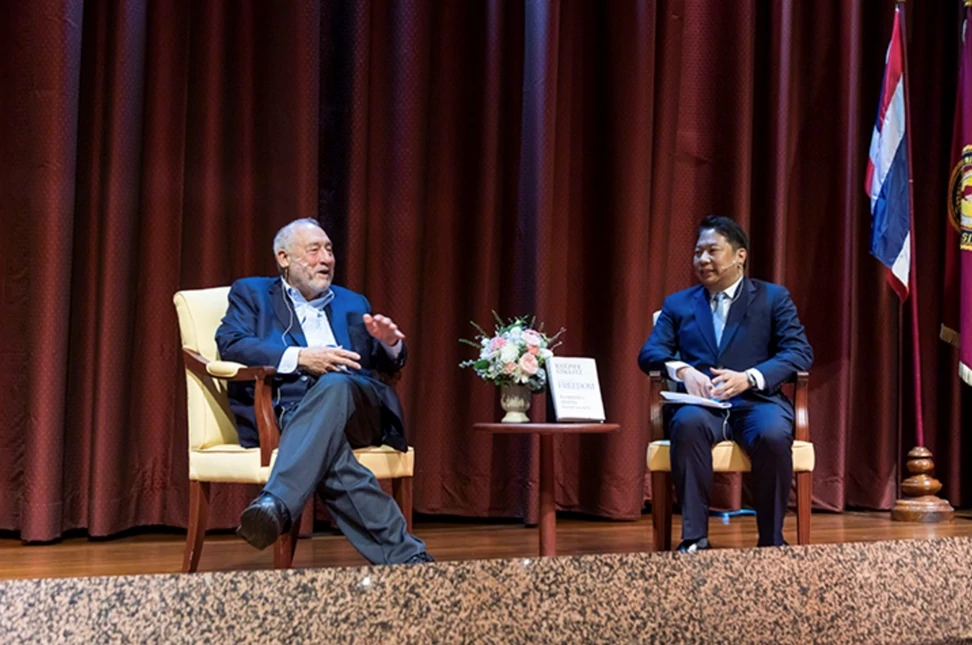
World-renowned Nobel laureate economist Professor Joseph E. Stiglitz was the keynote speaker at a high-profile international symposium jointly organised by the School of International and Public Affairs (SIPA) at Columbia University and Siam University, held in Bangkok. The event brought together leading academics, former policymakers, and business leaders to discuss sustainable economic development, inequality, and what Stiglitz calls the essential reframing of freedom for the 21st century.
A New Framework for Freedom and Economic Development
At the heart of Stiglitz’s address was a provocative and timely thesis: that future economic development must place freedom alongside humanitarianism — not treat them as competing values.
“A new framework for thinking about freedom and the state’s role in 21st-century society requires a deeper and more humanitarian evaluation of freedom,” Stiglitz emphasised. He argued that an economic and political system which ensures well-being, opportunities, and meaningful freedom for all is not idealistic but strategically aligned with global megatrends — and urgently necessary.
Critiquing Capitalism as It Stands
Professor Joseph critically evaluated the current capitalist system, stating that it cannot create true freedom and prosperity for all, instead fostering economic inequality, environmental degradation, and social instability.
He suggested that economic policies should prioritise equality, sustainability, and community well-being over growth-driven development, which too often deepens disparity. He also emphasised the critical role of government in addressing market failures — implementing policies that benefit the many, rather than allowing the freedoms of a privileged few to define what freedom means for everyone.
The Road to Freedom — Stiglitz’s Latest Work
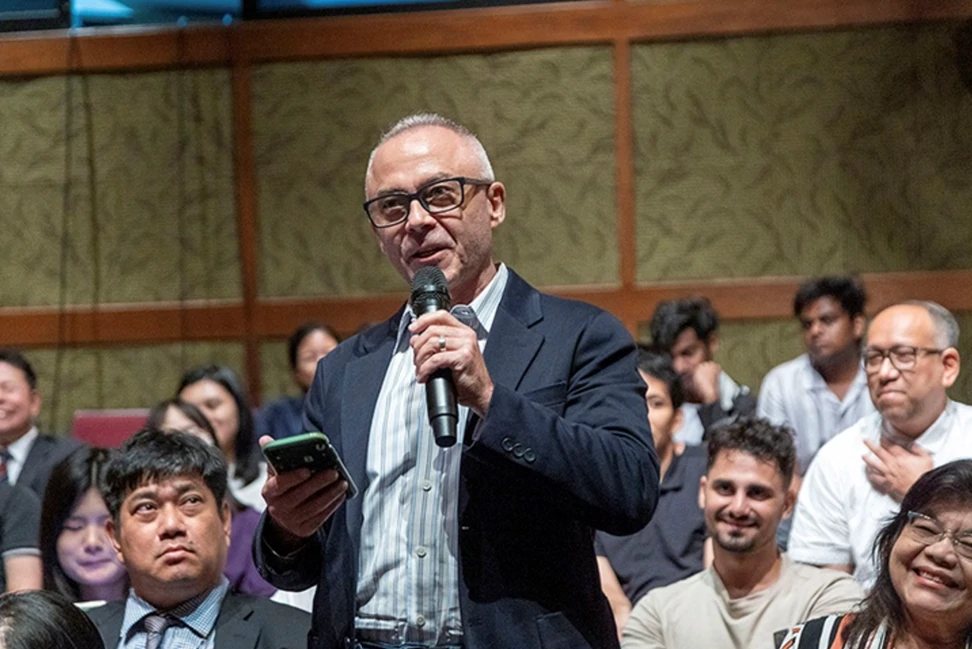
The symposium also served as a platform for Stiglitz to discuss his latest book, The Road to Freedom: Economics and the Good Society (2024), which presents an economic development approach centred on creating a framework where freedom and regulation are complementary, not contradictory. The book challenges the neoliberal tradition associated with Hayek and Friedman, drawing instead on empirical evidence to argue for a more equitable and humane economic order.
Key Themes Discussed
Stiglitz’s address — and the wider panel discussion — ranged across several interconnected issues of pressing relevance to Thailand and the broader Asia-Pacific region:
Political and Natural Environment
Stiglitz highlighted the influence of political actors and business groups in shaping policies that often fail to reflect the needs of the majority. He called for greater transparency and public participation in policy-making. On climate, he urged the implementation of environmental policies that reduce greenhouse gas emissions and conserve natural resources in alignment with sustainable development goals.
Economic and Social Inequality
Professor Joseph noted that economic and social inequality is intensifying in Thailand. Economic development focused on major urban areas has left rural regions lacking the necessary opportunities and resources, resulting in unequal access to basic services such as education, healthcare, and employment.
The Role of Education
The symposium connected directly to the education agenda, with Assoc. Prof. Dr. Jomphong Mongkhonvanit — Vice President and Dean of the Graduate School of Business at Siam University, and one of Stiglitz’s former students — hosting the discussion and offering a Thai perspective.
Associate Professor Dr. Jomphong concluded by stating, “Education is the key to creating freedom and equal opportunity. Investing in an education system that focuses on quality and equality will help reduce inequality and enhance competitiveness on a global scale. Therefore, in this era, it is crucial to emphasise using technology and innovation as tools to connect knowledge to everyone in all areas, whether in cities or rural regions, to expand learning opportunities and develop the potential of learners comprehensively and sustainably.”
A Distinguished Panel
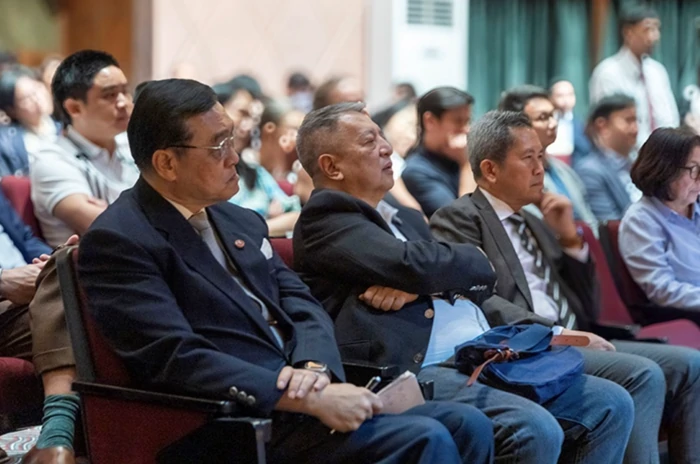
The discussion panel featured a remarkable lineup of Thai alumni and public figures, including:
- Dr. Porametee Vimolsiri — Chairman of the Board of Directors, Bank of Thailand
- Mr. Piyabutr Cholvijarn — President and Vice Chairman, Kenan Foundation Asia
- Mr. Kasit Piromya — Former Minister of Foreign Affairs
- Mr. Suranand Vejjajiva — Former Prime Minister’s Office Minister
The panel exchanged perspectives on sustainable development and strategies for reducing urban-rural inequality in Thailand — translating Stiglitz’s global framework into national policy priorities.
Why This Matters for Business and Industry
Stiglitz’s message carries direct implications for the private sector. In an era of growing pressure on corporations to address inequality, climate change, and social responsibility, his call for freedom balanced by humanitarianism offers a conceptual foundation for rethinking what responsible, sustainable business looks like in practice.
For Thailand — navigating its own transitions toward Thailand 4.0, digital transformation, and green economy development — the symposium offered a rare opportunity to hear from one of the world’s foremost economists on how to bridge the gap between economic ambition and human flourishing.
Key Takeaways
- Stiglitz argues that 21st-century economic development must integrate freedom with humanitarianism — rejecting a false choice between growth and equity
- The current capitalist model is generating inequality, environmental harm, and social instability that threaten long-term prosperity
- Government has an essential and active role to play in correcting market failures and ensuring policies serve the majority
- Education, technology, and innovation must be deployed as tools for equalising access — not concentrating advantage
- The symposium reflects the growing role of Thai academic institutions such as Siam University in convening global thought leadership on issues central to Thailand’s development future
Read the full coverage on [Forbes Thailand](https://www.forbesthailand.com/news/other/joseph-stiglitz-points-future-of-world-business-must-be-sustained-with-freedom-along-with-humanity) and [Bangkok Post](https://www.bangkokpost.com/thailand/pr/2888282/joseph-stiglitz-a-path-to-freedom-for-a-better-economy-and-society).